Parking-permit enforcement using number plates and ANPR
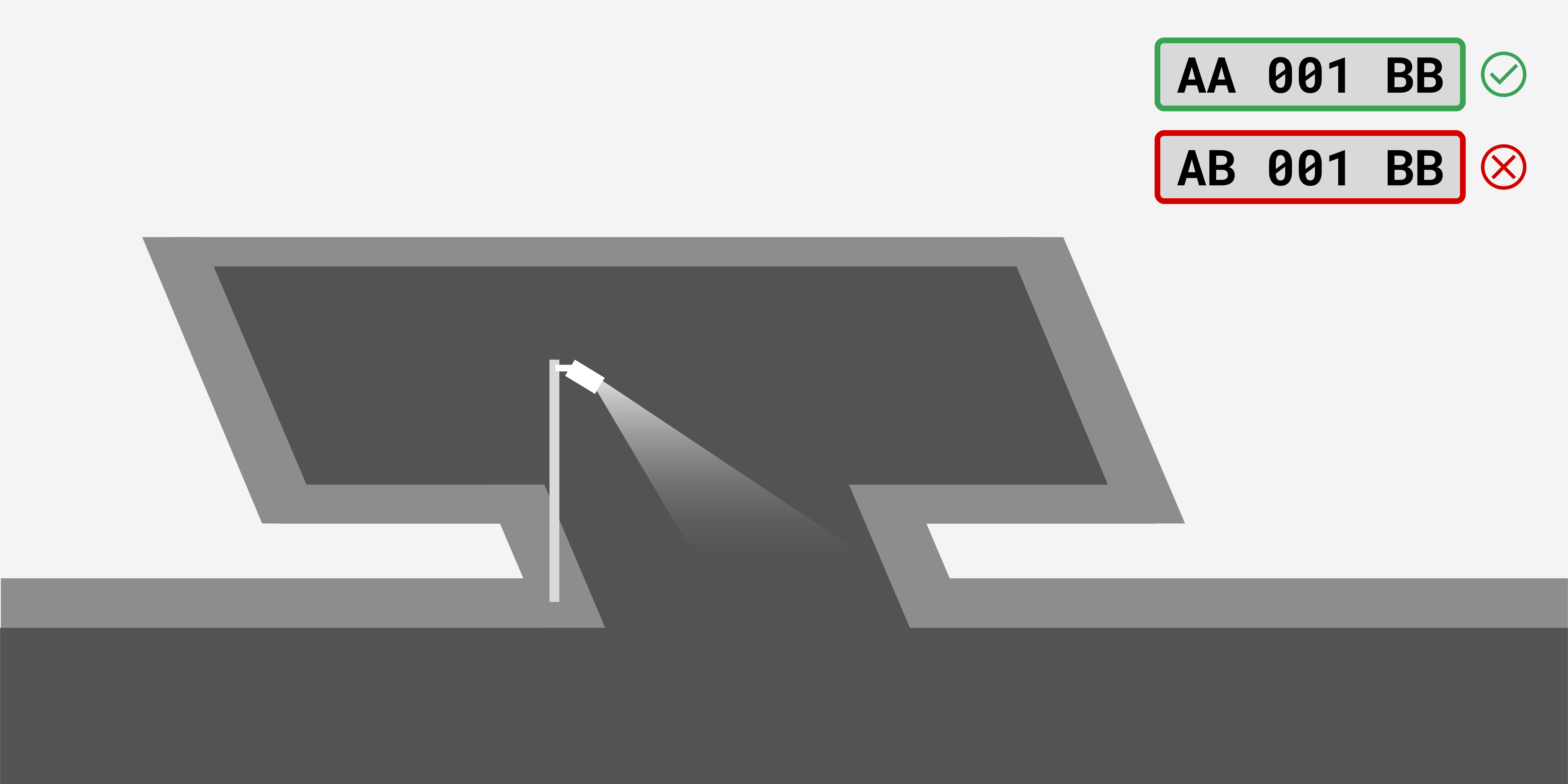
Supa Parking enables parking-permit checks using the vehicle's number plate. An officer enters the plate in the web application to verify a valid authorisation for the zone in real time; compatible ANPR/LPR systems can automate number-plate capture.
Digital checks without windscreen permits
The platform links the number plate to the permit, validity period and authorised areas. There is no need to look for a sticker, card or paper permit on the vehicle. Staff can carry out checks in a browser from a smartphone, tablet or computer.
This approach reduces physical materials, simplifies renewals and vehicle changes, and makes updates in the central platform immediately available to enforcement staff.
How does a number-plate check work?
The officer enters the registration number in the enforcement function. Supa Parking compares it with registered authorisations and shows whether the vehicle has an active permit for that zone and time.
Because issue, renewal and enforcement use the same central record, there is no need for manual exports or synchronisation between separate lists.
ANPR and LPR camera integration
ANPR and LPR are systems for automatic number-plate recognition. When compatible interfaces are available, Supa Parking can integrate with these solutions to receive detected plates and compare them with valid permits.
Automation is useful at entrances, exits, access points and in areas where manual checks would be slow. The exact setup depends on the camera system, parking rules and the operator's chosen workflow.
Permits remain connected to zone rules
A plate authorised in one area is not necessarily authorised everywhere. Supa Parking considers the relationship between vehicle, permit, price, zone and validity period, enabling a more precise check than a simple list of registration numbers.
Integration with existing systems
APIs can connect the platform to number-plate readers, portals, enforcement applications and other external systems. Operators can therefore digitise enforcement while retaining existing hardware and processes where compatible.